Saturday, August 2

Why is Equinox so Special?


On Summer Solstices Kamala and Dez hosted a sizzling HOT book release party, complete with erotic strip tease and sensual story telling... Now, the Autumnal equinox is upon us, and we plan to out-do ourselves. What's so special about the Autumnal equinox? It's one of two times a year when the sun crosses the equator, and the day and night are of equal length--approximately 12 hours in duration. During the Fall equinox (Sept. 22, 2007 3:44pmPST) the sun enters the sign of Libra -- the house of balanced scales. This is nature's portal to nondualistic integration. In Tantra, we celebrate the masculine (day) and feminine (night) coming together and creating an opening for divine energy to flow into the human form.
Equinox is a sacred throughout history, across many cultures. In the Pagan practice it is called "Mabon" and is crucial to ensure a hearty final harvest to survive the winter months ahead. The ancient Celts conducted a mock sacrifice of a large wicker figure which represented the spirit of vegetation. This ritual sacrifice has been reborn in the Burning Man Project. Every Fall tens of thousands of people come together to set up a little city on the dried lake bed of Black Rock Desert, Nevada to celebrate life with fire, art and free expression.
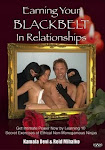
One of the central themes in our Book "Sacred Sexual Healing" is bringing heaven to Earth. We feel this fall is the most auspicious time to introduce this book to the broadest possible audience, giving them tools to strike a fulfilling balance between spirituality and sexuality. Thus, we plan to celebrate the equinox it with a massive virtual book launch party. We are putting together a wonderful bundle of free bonus products, including a live tele-seminar where Dez and Kamala reveal secrets that were too controversial to write in the book. If you want details write to Kamala@blisscoach.com and Stay tuned, I'll be sending more juicy details as the date gets closer!

Tuesday, July 1

What is Tantra, Anyway?

Ever hear the famous Zen koan, “What is the sound of one hand clapping?” Monks have meditated on this riddle for years, only to result in an empty mind. The logical head bangs itself against a concrete wall trying to answer the unanswerable. When sincere seekers ask, “What is Tantra?” we might say, “Tantra does not exist outside of you,” and invite them to meditate on their embodiment. But many modern students are stubborn and insist on a mental answer, even if it’s a partial answer, which leads to the common assumption that Tantra is some kind of sexual yoga. (Isn’t it?)

Like Zen, the Tao and Buddhism, Tantra is a path to enlightenment. But understanding the spontaneous nature of this non-linear path will challenge the mind. Our favorite textbook definition of Tantra points to its Sanskrit roots. The prefix “Tan” implies expansion and “tra” means liberation. Thus, Tantra can be interpreted to mean liberation through expansion. Sure, it's poetic, but it’s altogether too intellectual. Tantra doesn’t occur between the ears. Nor does it occur between the legs. If you were to ask Baba Dez what Tantra is, he might outstretch his arms as if he were offering a big embrace and reply, “Tantra encompasses every aspect of living. Tantra is about how we live, how we breathe, eat, sleep, work, play and love. It’s about everything. And the practice of Tantra is a practice of living life in a way that creates power and magic and divinity. It is any practice that supports us in embodying our divinity.”


TYPES OF TANTRA


Our combined explorations in Tantra have led us through a vast continuum of practices that range from Goddess worship to shadow work; from mind-altering meditations to transcendental lovemaking; from erotic massage to chanting in cemeteries; from Sex Magic to self-inquiry. Tantra is like a wise old tree with a vast and deep root system. Some of its more developed branches include:


? Tibetan Tantric Buddhism or Vajrayana Tantra


? Hindu Tantra (Shakta) or village Goddess worship


? Kashmiri Shiviaism or Kaula as taught by Abhinavagupta, or more recently, Daniel Odier


? Taoist healing arts as taught by modern master Mantak Chia


? Kundalini Tantra as popularized by Sikh Yogi Bhajan


? Left-Handed Tantra as practiced by followers of Sri Bhagwan Rajneesh (aka Osho)


? Ipsalu Tantra as taught by Bodhi Avinashina, based on Avatar Baba Ji’s teachings


? Quodoshka practiced by Native Americans, Mayan, Toltec and Cherokee


? Shamanic sexual healing as practiced by aborigines across the planet


? Sex Magic as practiced by Celtic Pagan Covens and Alistair Crawley Cults


? Other types of Tantra, such as Bonpo, Animism, Jain and the sacred path of no-path that comes with direct download and spontaneous awakening


This list is in no way exhaustive or complete, but we can conclusively say that Tantra, like yoga, is not a religion. We’ve encountered Buddhists, Christians, Muslims, Jews and Hindus alike on the Tantric path. There is even a resurgence of teachings that Jesus practiced Tantra with Mary Magdalene. And this lineage sources back to the Egyptian Goddess cult of Isis. Tantra does not exclude any portion of the human experience — it includes the full spectrum of humanity. It embraces not only the light but the shadow. Tantrikas give permission for every experience, especially the shadowy aspects of self that are not usually accepted. Embracing the shadow is embracing our humanity. When we shine the light of acceptance on our darkness it always transforms. Instead of judging or preaching, Tantra meets people wherever they are and offers tools for them to expand. The different types of Tantra appeal to different types of people who have different needs.


COLORS OF TANTRA


Tantra is further subdivided in terms of color: White, Pink and Red. White Tantra orients around the subtle practices and philosophies. Physical touch and sexual practices are not necessary in order to advance on this path. Tibetan Tantric Buddhist monks, for example, can engage in profound love making rites with deities through meditation and visualization. Vajrayana Tantra involves many powerful concentration exercises that bring universal awareness down from the crown chakra into the heart, without activating the lower chakras. Yogi Bhajan's Kundalini Yoga also offers partnered exercises that include eye gazing, and breathing and sounding exercises that circulate and build sensual energy without sexual contact. Similar practices are commonly referred to as Solo Practice, Right-Handed Tantra or the path of the Dakhsini Marga or Bramachari.


Pink Tantra embraces both the spiritual and the sexual aspects of the practice. This is the path where the heart is opened and lovemaking is practiced with honor and reverence. It is a merging of embodied souls, for both pleasure and enlightenment. This path can also encompass transcendental lovemaking, Taoist sexual healing arts and the sweet, sensual exercises in modern Tantra pujas. This path is sometimes referred to as violet, the middle Tantra or the full path.


Red Tantra consists of many passionate sexual practices. Traditionally the color red connotes femininity, potency, passion and sex. This path can be liberating for the sexually repressed and may also hold interest for the sexually obsessed. The fiery Kundalini practices of Red Tantra use taste and touch to experience the primal sexual impulse that can create intense purifications and awakenings. Practitioners of Red Tantra see the sacred in the profane and instead of bringing the Kundalini energy up to the crown, they draw spiritual energy down into the root, sex and power chakras. These Tantrikas are also known as Vama Marga, Left-Handed Path and sometimes negatively called California Tantra or the Cult of Ecstasy.


There is also the lesser talked about branch of Tantra known as Black Tantra (which will not be addressed in this book). This is an aboriginal Shamanic practice, like black magic, which transforms physical energy with or without the consent of all parties involved. During Kamala Devi’s first pilgrimage to India, she was astounded to discover that most Indian villagers feared and revered Tantra and thought of it as witchcraft. It is both feared and revered for its power. The Aghori are an example of an extremely secretive Hindu sect of Black Tantra practitioners. Aghori is a Sanskrit word that means non-terrifying. The practitioners have been known to cover themselves with ash from graveyards and use human bones in their rituals. After years of advanced Tantric practice, many yogis begin to experience siddhis or supernatural powers. These powers can be used for personal gain or for service. Throughout India today, people seek Tantrikas for hire, like wizards or witch doctors. They are paid to cast spells, end legal battles, even burn down someone's farm. Of course, powerful karmic consequences can result from using sexual energy to manipulate others. Many people who begin to play with these superpowers often get lost on their path. Instead of advancing towards enlightenment, Black Tantra may lead people further away from enlightenment.


SEX MAGIC


There's a huge distinction to be made between Black Tantra and Sex Magic. Out of fear or ignorance, many people confuse the two. Sex Magic is controversial not only in our puritanical Western society, but also in Hindu, Tibetan Buddhist and other Tantric belief systems. Most maintain that sexual energy is to be preserved for spiritual advancement not material gain. Throughout this book, we assert a non-dualistic philosophy that does not judge material or sensual pleasures. We teach practices that cultivate sexual life force energy for healing, pleasure and god realization. In Chapter 9, we proudly introduce a powerful, practical and accessible system called the SHAMAN Method of Sex Magic. We offer this method with pure intent and maintain that the practices within this book are safe and heart-centered. Eventually your body’s inner guidance system will tell you what is in your highest good. If you feel yourself expand in love then you are sincere in your practice. If you feel yourself contract in fear, guilt, shame, anger, jealousy or competition, then you may want to stop, breathe and come back to the practice when you’ve raised your vibration. Sending negative energy into the universe may beget negative manifestations, but more likely it won’t manifest anything because lower vibrations drain our personal power, which is necessary in order to manifest.


NEO-TANTRA


Tantra may have deep roots in India and Tibet, but new seeds were planted in the West during the sexual revolution of the 1960s and ‘70s, and have been growing like wildflowers ever since! The modern resurgence of the message that sexual liberation can lead to spiritual liberation is often referred to as Neo-Tantra. Various gurus, travelers and teachers have been spreading the word by way of weekend workshops and evening pujas. Some teach techniques for better, longer, more satisfying sex, while others seek enlightenment, liberation and God-realization. The more practical Tantric practices adopted by Western Tantra include balancing chakras, raising the Kundalini, Goddess worship and expanding orgasmic energy. Traditionalists criticize Neo-Tantra and warn that these New Age practices are incomplete without the use of gurus, mantras, yantras, tapas and other disciplines. Many feel that swingers and sex clubs from the ‘70s and ‘80s are usurping the name Tantra for their sexual practices to justify, validate and mask sexual addiction. We maintain that regardless of its many manifestations, Tantra can also be an embodied spiritual path that continues to evolve and spontaneously inspire practitioners at whatever level they are ready.


WHAT IS SHAMANISM?


Shamanism is believed to have originated in Siberia. The word Shaman means “to know” and is the earliest known spirituality sourcing back to prehistoric time beyond measure. Archaeological evidence of Shamanism has been found from 40,000 years ago, and Shamanic practices have existed in every culture throughout history. Shamans have been known to: Heal human suffering, interpret dreams, reveal prophecy, reverse disease, control the weather, project their spirits out of their bodies, exorcise spirits from other bodies, channel animal guides and spiritual entities, shape shift, and time travel. Michael Harner, who has dedicated his life to studying and preserving Shamanic teachings through the Foundation for Shamanic Studies, says, “A Shaman is a type of medicine man or woman especially distinguished by the use of journeys to hidden worlds otherwise mainly known through myth, dream and near-death experiences.” Shamans are widely known as intermediaries who use trance and spirit guides to travel between realms. Trance is induced through singing, dancing, drumming, meditating, breath control, fasting or ingesting natural psychoactive drugs. Both Tantra and Shamanism use specific principles and practices for sexual healing and enlightenment. Some of the basic tools include breath, sound, movement, prayer, chanting, lovemaking and ritual. Tantra is also about cutting through the illusion, veils, dreams and maya so we can break free of the nightmare of the collective unconscious. Scholar of Tibetan Shamanism, Terence McKenna, makes the correlation between Shamanism and Tantra apparent in his book The Archaic Revival. He states that Shamans “use archaic techniques of ecstasy that were developed independent of any religious philosophy.” He further defines ecstasy as “the contemplation of wholeness.”


NON-DUALITY IN A NUTSHELL


Have you ever had that mystical sense that we are all one? Do you remember the last time you felt totally connected? That’s the essence of Advaita, or non-dual Tantric philosophy. Advaita is a Sanskrit word meaning “not two.” It maintains that all matter, regardless of its distinctly different properties, may appear to be separate but is still connected to the whole of existence. In other words, non-duality is the philosophical perspective that separation is an illusion. There is a classical metaphor of a clay pot used to answer the oft-asked question, “If it is all one thing why don’t I experience it that way?” The clay exists before the potter forms it into an individual pot. The pot is then used to carry water, and though it has a specific function, it is not separate from the clay. Even after the pot is broken, the clay remains. Advaita points out that the clay exists in the past, present and future. Though it may change shape and function, the individual pot is always made of clay. Similarly, everything in the world, from mineral to man, may have a different appearance and function, but ultimately it’s all made of source energy. Another Tantric approach to the non-dual nature of reality is the practice of self-inquiry. In order to transcend the ego and experience union with the absolute, the guru Ramana Maharish advocates that we ask ourselves, Who am I? Through a devoted pursuit to know oneself, seekers discover that they are not separate from the one who is sought. Take a deep breath, now, and notice the words you are seeing on this page. If you are looking at these words, where does the looking stop and the looker begin? Can you pinpoint where your eyes are reading? Where does your comprehension stop and YOU begin? Who are you? Consider the possibility that the words being seen, the seeing and the seer are all one. In the sincere contemplation of self, the ego ultimately dissolves into oneness. We challenge you to continue this contemplation throughout every action of the day. (Beginners be warned! You may get enlightened, but you may also get a headache.) Sri Bagwan Rajneesh AKA Osho implores you to contemplate opposites if you want to experience enlightenment. In Tantra, we explore the polarities of male/female, giving/receiving, active/passive, self/other, mind/body, naughty/nice, even dualism/non-dualism to lead us to greater levels of truth. Tantra is a non-dual spiritual practice that embraces and transcends the illusion of separation. Instead of seeing the body as the opposite of spirit, the body is accepted as a spiritual vessel. Rumi illuminates this teaching in his poetry: Out beyond ideas of wrong-doing and right-doing, there is a field. I’ll meet you there. When the soul lies down in that grass, the world is too full to talk about. Ideas, language, even the phrase, each other doesn’t make any sense. Translated by John Moyne and Coleman Barks Sexual excitement carries within it the impulse for two to become one. One does not have to practice Tantra to experience the urge to merge, but a true Tantrika understands that this primal impulse to copulate is also the desire to commune with God. Wanting to connect with the beloved comes from wanting to acquaint our selves with the divine. We embrace the illusion that we are separate because without it, we couldn’t share the juicy experience of reconnecting with the beautiful light from which we originally separated. It is a cosmic game of hide and seek, a divine play. We separate into many forms and creations not only to merge again, but also to explore the vast kaleidoscope of possible experience. From the perspective of non-dual realization, one can easily see that all physical matter is a manifestation of divine energy. Some manifestations are more subtle and some more dense, but they are all equal expressions of the divine. God exists in both the sacred and the profane. God’s grace can be felt equally from the highest bell tower as from the darkest storage basement. Divinity is acknowledged not only in the beautiful food one eats, but also in what our bodies later excrete. Prayer can be equally powerful through worship at a sacred altar or through anal sex with a conscious lover. Full Tantric non-dual philosophy recognizes that we are half human, half animal and all divine.


MOVING MEDITATION


In Tantra and Shamanism, meditation does not have to be still and silent. We invite our whole body and all of our senses into whatever we’re doing whether walking, eating, or making love. In every meditation there is the component of listening to God, which means we are listening to the minute and magnificent details of the moment and tuning in to the great creation within and around us. During a walking meditation we may notice the sounds of the birds and whatever other creatures cross our paths. These signs of infinite intelligence abound. In eating, we savor the fullness of each flavor. In making love, we are listening to the body, breath, and smile of the beloved. We notice how God animates the beloved, thereby making love to the divine. Magic happens when people feel listened to with such reverence and attention that they open, to unfurl and glow. Their God self shines through.


MINDFULNESS


Where is your awareness right now? Are you thinking about a past lovemaking experience or something you have to do? Perhaps your body is aching and crying out for some attention. What's happening right now… right now… and right now? All three “right nows” are separate moments, and when we pay attention to the subtlety of every moment, we can connect with the abundance of creativity and love that is available right here and now. In Buddhist theory, this concept is referred to as mindfulness. Today it’s a popular spiritual teaching that is incorporated into modern stress management programs. It is generally accepted that if we practice mindfulness in everything we do, we experience the richness that life has to offer. Sex therapists, educators and surrogates are constantly helping people learn to slow down. Anxiety, stress and tension are the primary causes of most sexual dysfunctions. To help couples and individuals increase sexual mindfulness and decrease sexual anxiety, Masters and Johnson introduced a series of sexual exercises called “Sensate Focusing.” These exercises are widely used in the therapeutic community and in Tantra 101 classes and detailed in the Appendix as Exercise #1. These simple techniques can be practiced at home or in conjunction with a comprehensive psychotherapy program. Sensate focusing can be used for restorative healing of sexual dysfunction or to bring more presence, conscious awareness and competency to the Tantra seeker.


Tantra is experiential. Now that we have introduced some basic theory, we can commence the practice. In the next chapter we present the three most basic tools for creating a sacred sexual healing practice: breath, boundaries and chakras. Read on to discover how treating your body like a sacred temple will expand your healing, pleasure and ability to manifest magic.


To purchase your copy of Sacred sexual Healing by Baba Dez Nichols and Kamala Devi go to http://www.partnerplayshop.com/


Tuesday, January 1

A Tantric Birth Story


Baby Devin Echo McClure was born 7 Lbs. 12. Oz. 21 inches long on 1/13/07


It's impossible to describe a birth contraction to someone who's never had one. The closest thing I could compare it to is an orgasm, except instead of producing pleasure, the sensation is anywhere between a light fluttering and an excruciating seizure that lasts from 20 seconds to a couple of minutes. And then it's gone. The pressure disappears and it's like, what the hell just happened? My first contractions came before winter solstice and continued inconsistently for over a month. We called them "surges" and had many sleepless nights of "practice" labor. When I was nearly 43 weeks pregnant the midwife at the birthcenter encouraged us to consider natural methods of induction, so that she wouldn't have to transfer us to the hospital where the mainstream medical protocol is to administer heavy pharmaceuticals or surgery to late term women. But the night before my scheduled acupuncture appointment, I had a lucid and disturbing dream: Someone was trying to pierce my nipple and the baby kicked so hard you could see it's little leg kicking at the walls of my womb, from the inside. When lying on the treatment table, I re-told my dream to my acupuncturist, Jess, and she agreed "this kid does not want to be rushed." So instead of inducing, she referred me to a homebirth midwife who'd allow me to wait until the baby was ready. Michael and I had about 3 days to turn our home into a free standing birth center complete with plastic sheets, rubber gloves and a warm hot tub.
On Friday Jan. 12th 2007 we finally called Jess to come and hang out with us while I labored on the couch. When Jess arrived she informed us that it was a record-breaking cold winter night and decided to drive back home to retrieve extra space heaters. When Michael plugged them into the wall, they overwhelmed our old circuitry and caused power outages. I lay on my back clenching my fists and counting my breaths while Michael rushed around the house flipping power switches and hanging blankets over doorways for extra insulation. I went thru my 'hypnobirthing" script by visualizing a smooth easy 3-hour birth. But the surges came like painful pulses from outer space. The sensation was otherworldly, and when they were consistently 3 minutes apart for over 2 hours we called the midwife. By the time the birth team arrived, I was spontaneously chanting Om with every exhalation, and when that got old, I used other mantras like Open, Om Mani Pad Me Hum, and Sat Nam.
I labored on the couch, the toilet, the hot tub, but according to the midwifes, the anterior lip of my cervix still had to melt away before I could push. I wanted relief, I wanted to run, I wanted drugs, I wanted to chew on a nearby tree-trunk. Finally, my midwife followed me to the bathroom to have a chat...births usually stalls because of fear, she asked, "What are you afraid of?" I searched my soul and told her that I felt like an animal. My pain-body was so overwhelming I couldn't access my spiritual guidance. She asked me what I needed: to chant, to dance, to read scripture? Perhaps I have a picture of a guru or some other spiritual symbol that would help me. But a tantrikas strength comes from within, and I knew only direct experience was going get me through this. I kneeled down off the toilet, took her hands in mine and prayed. "I'm ready now," I said, then marched into my bedroom to puke my guts out.
When I opened my eyes, I saw the divine looking back at me. There were five goddesses in the room in addition to Michael, and with each surge they chanted: Down, Down, Down Devin Down. They were a chorus of temple priestesses while Michael's deep voice anchored me as it calmly coached me to breath down through my yoni. I was high from the endorphins, serotonin and oxytocin. I was high on Love. Michael said my eyes were big and wild like a feral cat with a bird in her mouth. Each surge came like a transcendent wave of light. I followed my inhalation up, out my forehead and used tantric cobra breath to bring my awareness back down to my yoni. I left my body. My mission: to stretch out into the world of spirit and bring my son safely down into the world of form. I changed positions from spread eagle on my side, to squatting, to the birthing chair, to slow dancing, to straddling Michael's lap.
After two hours of these gymnastics, when Devin's maleable head started to crown, I squatted against Jess's knees so that Michael would be free to catch him. The last thought that went through my mind before breathing Devin out was, I'm going to bring down Michael's son. I heard someone say "Your baby is here." And other excited voices celebrating as if they were at the end of a long tunnel. "Slow. Be Careful. He's cord-wrapped." I could hear the midwife coaching Michael on how to unwrap the cord--twice around his neck and once around his abdomen. Then somebody placed him on my belly. I heard him sneeze, he coughed out the amniotic fluid and then cried. My baby was crying. I looked around the room and found eyes, but otherwise I only saw little points of light.
I looked down and made out the back of my baby's head. His hair seemed sticky and black. "Can you turn him so I can look into his eyes?" I asked. And Michael gently rotated his little body. As soon as he looked up, he latched on to my breast and started sucking. Whoa. Now I could see again. His sucking pulled me back into my body. I was holding his head to my breast and experiencing his intense thirst for life. My baby boy is born. I looked at Michael and felt the most amazing feeling of all: the placenta started slipping slowly down my womb, and softly out between my legs. It felt divine, like God was licking me clean.
In that moment, all the pain was washed away, and I was suspended in pleasure. The birth was complete. After the Midwives inspected the afterbirth, I asked for privacy so my new family could have a sacred moment of communion before we cut the cord. Thus, after 21 hours of laboring on the coldest night of the year, Devin Echo McClure was born. Kamala Devi is the author of Don't Drink the Punch if you're interested in purchasing your copy go to: www.Partnerplayshop.com

Wednesday, August 8

DEAR DIARY

I started journaling at age 12. Like Anne Frank, I was too
young to worry whether I was doing it right or wrong. I
felt this daily practice put me in the company of important
journal keepers like Benjamin Franklin, Carl Jung, and of
course Elvis. Through the years, my journal morphed into
many things: A friend, a mirror, a teacher and an excuse to
sit alone at a romantic cafe.
At one point I even used it as a "Book of Shadows"
which is a modern pagan practice. Throughout history,
witches have been known to record their spells and charms
and keep a detailed account of the effects of their work.
Thus, I knew my journal was a spiritual tool, but I had no
idea of its transformative power until Julia Cameron
introduced me to The Artist’s Way.
In her spiritual path to creativity, Cameron prescribes
the Morning Pages. This practice gave me permission to
speak my truth, to release my judgments and to transcend my
small self. The Morning Pages are a type of meditation
wherein one witnesses their own consciousness without
attachment. In the last 5 years of teaching the Artist's
Way journey, I've seen dozens of students use this tool to
change careers, leave bad marriages, lose weight, take up
new hobbies, become professional artists and experience
self-realization.
Whether or not you are ready to experience the full
Artist Way journey, the Morning Pages are a beautiful
adjunct to any spiritual practice. Here are four basic
steps to personal transformation:
(1) Write daily, preferably immediately after waking.
This is when your conscious mind is closest to your
subconscious. Set your Alarm 30 minutes early and make this
your morning ritual. On the average it takes 20 minutes.
Find a comfortable and/or inspiring place to practice each
day. If you can't find the time to do it in the morning
then do it at your first opportunity during the day.
(2) Write long hand. This taps into the creative
hemisphere of the brain. (It can be a combination of
writing and printing.)
(3) Allow your stream of consciousness to flow. DO NOT
CENSOR or even edit yourself (resist the temptation to
check spelling or even cross out words.) Feel free to write
about: emotions, reactions, thoughts, realizations,
interactions with people or situations, ideas, dreams,
whatever occurs to you when the pen is on the paper. If
you're afraid of messing up a journal then use a cheap
spiral bound notebook. Your journal is private. Do not
show anyone, not even yourself--at least for the first few
weeks.
(4) Don't stop until you've reached 3 pages. The size
and shape of your journal doesn't matter, but don't write
more than 3 pages.
This process often elicits intense resistance from the
ego. As a Bliss coach, I either guide people past their
resistance to the morning pages, or lead them into
effective alternatives such as:
Manifestation journal
Automatic writing
Morning drawings
Gratitude journal
Travel journal
Prayer journal
Dream journal
Whatever type of journaling you practice, I invite you to
regard it as both a spiritual and creative act. Take this
opportunity to re-commit. Inspiration may strike at any
time, like a lightning bolt out of the clear blue sky.
Daily Journaling creates a downpour of new ideas and one
day you may find your pen has turned into a lightening rod.

Friday, November 3

TIME MANAGEMENT FOR TURKEYS

Unless you put the big rocks in first, you won't fit everything in. In other words: Plan time-slots to work on your goals before anything else, or the inevitable sand and water (busy work) will fill up your days and you won't fit the big tasks in. Big Rocks can be anything from writing a book, working out, meditating, date night, or whatever tasks help you achieve your goals.

With the holiday season fast approaching, we could all use a few reminders on how to make the most of our time. Here are some essential tips:

*First, get clear on why you want to save time: What ultimately do you want to accomplish? More time for self, romance, family, rest, creativity, to make more money? Having a juicy reason to master your time will ensure your success.

*Commit yourself to change. Be prepared to make drastic changes. Challenge your old habits, detach from routines, and be willing to defend your time when others try to dictate how you use it.

*Make a list of what needs doing daily. Time is your most precious resource, take the time each night to strategize how you want to use your next twenty-four hours. Time management is impossible without a plan, you're too easily distracted or seduced off-task.

*Prioritize your list. Without prioritizing you may waste time with busy-work. Learn to work smart not hard.Tackle the items in order of their importance that
way, if you do not get to everything on your list, you will at least get to the most important things first.

*Allocate time for the Big Rocks. Be firm and protective of the time you've allocated for projects, meetings, paperwork, telephone, and visitors.

*Keep a clean desk, file all paperwork unless your working on it.

*Handle each piece of paper only once. Do not under any circumstances pick up a job, do a bit of it, then put it back on the pile. Consider yourself a stamp, stick to the work until it get's where it's going.

*Learn to say 'No', politely, and constructively, giving people reasons to justify your position, eg., "I understand this is urgent for you, but I'm committed to
taking care of this goal right now."

*Set specific times to handle phone calls and emails. If you can't stop the interruptions then go somewhere else to work.

*If you can, get a good assistant, secretary or VA then delegate as much as possible.

*Never try to eat an elephant all in one go. Break big projects down into digestible chunks.

*Resist silly emails and text messages, reading irrelevant materials, unecessary tidying and google searching, passive TV watching, aimless shopping or
traveling. These activities are habitual comforters which are counter productive.

*Reading these tips will not help you unless you put them into effect. Choose at least three new behaviors and take action--otherwise your time will be gobbled up like turkey on thanksgiving. ;)

Kamala Devi is an author, coach, public speaker and soon-to-be mother. If you found this article helpful, she invites you to join her at the Personal Power Playshop which is her last public event before going into maternity
retreat. Her Tantra Novel Don't Drink the Punch: An adventure in Tantra is available at:
www.dontdrinkthepunch.com

Friday, September 1

POSTCARD FROM PARADISE

Four months into pregnancy the morning sickness passed, and since my womb is not uncomfortably large yet, Michael and I decided to honeymoon in Bali. We had no idea what we were getting into until the first night when the island cast a spell on us. Bali's magic is indescribable, but if I were to compare it to something, I'd say it's as beautiful as Hawaii, as spiritual as India, and as friendly, inexpensive and easy to travel as my favorite travel destination:
Thailand. Just imagine a volcanic island about the size and population of San Diego County where Hindus, Muslims and Buddhists practice harmoniously side by side.

We spent the first week frolicking among terraced rice patties with my spiritual teacher, zYoah and his companion Colleen. Our time in Ubud was filled with luxurious massages ($7 per hour,) extravagant gourmet meals (average bill $6 per person,) and long philosophical discussions around a darshan table with like-minded artists, musicians, coaches, and tantra teachers from all over the world ($ Priceless.)

Our next destination was Uluwatu cliffs where Michael surfed world-class waves breaking over dangerous coral reefs. We then hired a devoted Hindu driver who took us to visit sacred lakes, volcanoes, mountain villages, and to meditate in ancient temples. Along the way we fed monkeys, found snakes, and saw a huge furry fruit-bat that looked like a flying dog.

Above all, it's the spirituality that enchanted me. Villagers spend weeks preparing elaborate ceremonial structures only to be burned in a glorious cremation celebration. Bali's pre-hindu pagan-like spirituality is still very alive in their daily practices. The Balanese philosophy embraces the dark as well as the light. Before a big ceremony, for example, cock fights are held in the
gardens outside temples so that the rooster's blood will run down into the earth and apease the devil, in order for the prayers of the devotees to go undisturbed by evil forces.

Another telling example of their non-dualistic belief system can be found in the classic Barong Dance. At the climax of this epic story from the Mahabarata, a number of peacekeepers go into trance to try to kill a powerful demon, but instead of the cliche story of good triumphing over evil, the Barong cannot be killed. The dancers reveal that in order for there to be good in the world, there must be evil. The devil, like God, is eternal. Thus the play ends with the ultimate sacrifice: wherein the dancers kill only the evil that lives within themselves in an act that looks like suicide.

Balanese art is deep and intricate. We were inspired by the woodwork, architecture and gardening everywhere. We're looking forward to incorporating these ideas into the green remodel of our Emerald Temple as well as weaving these deep spiritual teachings into our upcoming Artist's way and tantra series. For those of you that don't live in San Diego, we're excited this month to offer our first tele-course. And for our local community, we invite you to the following exotic adventures (we promise you don't even have to deal with homeland security)...

Saturday, June 3

WHO DO YOU THINK YOU ARE?

by Kamala Devi
Do you know who you are? Not just who you THINK you are, but who you REALLY are? Enlightened masters ask us to meditate on such things. My Spiritual teacher is on tour from Australia and will be offering an Enlightenment Intensive retreat in San Diego soon. Aside from my current pregnancy, this is perhaps the most life-changing event I've ever engaged in. Having introduced dozens of people to the technique, I understand however, that this retreat is NOT for everyone. Only the most sincere truth seekers who are committed to authenticity, integration, and transformation will find themselves attracted to the ego-confronting process.

Not everyone believes that enlightenment is possible. It has been universally assumed that enlightenment is necessarily preceded by a long, hard struggle, and available only to a dedicated few. But this is a new Era. Consciousness is accelerating, and by combining the ancient meditation on 'Who am I' with potent modern communication tools, the Enlightenment Intensive has a record of leading people to enlightened within one week-end! Since the origination of this process in California over 37 years ago, thousands of sincere truth seekers in over 40 countries around the world, have experienced enlightenment in under 4 days.

An enlightenment Intensive is a deep residential environment that dives into the direct experience of your true nature –not the ego self that people commonly
experience as separate and apart from others, confined within the opinions and attitudes of it's personality. The True Self is essentially free and connected to the way of the universe. The barrier to such a direct experience of reality is our attachment to intellectual conclusions about reality: our judgments, projections, preconceptions, and conditioned beliefs; even our analytical and logical
faculties.

The following excerpt from my new Tantra novel entitled: Don’t drink the Punch: an Adventure in Tantra, was inspired from my transformative experiences at the Enlightenment Intensives. This scene takes place at an ashram in India where one of the devotees is channeling teachings from a disembodied guru named Das: “There is one question that rises out of awakened consciousness. It is the same question you were born asking yourself. It penetrates beyond words into pure experience. The most direct path toward Self-realization: simply ask yourself, ‘Who am I?’ It’s not like an intellectual question to which there is an intellectual answer. No, it’s much deeper. ‘Who am I?’ “It is the only important question. All other questions are peripheral. Who am I? It has a magical power to it, like a mantra or an incantation. This question opens you directly to the energy of the divine eternal Self, the part of you that is God. In Sanskrit, it’s called Jiva or Atma. It’s the part of you that has always been with you, and will always be with you. "In the West, it’s called the soul, but the concept is not as clear. People have fear-based notions that if they really contemplate this question, they’ll become selfish or self-centered. You see, in the West, there’s a huge emphasis on individuality. People seek be different and stand out. Instead of pursuing oneness, Westerners often pursue unique expression. They over identify with their possessions: the car and house and clothes that make them different. You can get stuck on who you think you are or how others see you, but this is not your eternal nature. “Asking this one question takes you beyond your self-concept and allows all those mental trappings to fall away. Who are you beyond your clothes, name, and ethnicity? Who are you beyond your gender and even beyond your chakras? What is your true nature? Dive whole-heartedly into this question and you will find a doorway, directly to the divine, to the part of you that is absolute and real." If you're interested in more information about the upcoming Enlightenment Intensive, visit:
http://www.partnerplayshop.com/Enlightenment.html

If you want to read more about Kamala Devi's Don't Drink the Punch or Purchase a copy online go to:
www.DontDrinkThePunch.com

Tuesday, April 4

MANY PATHS TO ONE LOVE

A common question for people just starting their tantra yoga practice is: Do I have to have a partner? If they already have a partner, they often ask: Can I stay with them or do I have to practice with other people? The simple answer: It’s up to you. In truth, you are always at choice. Tantra is a spiritual, consensual, all-inclusive sex-positive practice. The only hard and fast rule on the path of personal growth is: know thyself, and unto that be true! It’s your responsibility to take a serious self-inventory and see which path nurtures your nature.

* Single practitioners often find that practicing solo helps them raise their vibration to attract a more suitable match.

* Many married couples find that practicing tantra exclusively with each other can take their monogamous relationship to another level of passion.

* Some couples in the tantra community decide to separate for an evening to practice with other individuals in order to bring more polarity back to their primary partnership.

* Some people chose to practice polyamory in conjunction with tantra to expand their expression of love and accelerate their personal growth.

* There are tantric practitioners who even chose to practice celibacy, homosexuality, swinging or BDSM.

No matter what path you chose, you'll have to face your own set of challenges and rewards. As a teacher of both tantra and polyamory, I’d like to clarify the often misunderstood connection between the two. Tantra is a practice of uniting sexual energy with divine energy. It’s also a path of Self Love. Polyamory is the practice of building honest heart-centered relationships with multiple lovers. It's also a path of self love. Polyamory includes a great degree of conscious communication and does not include anonymous sex, lying cheating or having affairs. Polyamory is often a discipline in personal growth, wherein jealousy, fear and insecurity are your spiritual teachers. In my new novel,Don’t Drink The Punch, An Adventure in Tantra, Master Das leads a tantra ritual in which all of the practitioners rotate and practice with different people. S/he then gives the following explanation of how loving multiple partners can deepen one’s tantric practice.

“I want to bring your attention to the essential objective of the Chakra Puja(tantra ritual.) You’re work is to worship the divine in whatever form she presents herself to you. Vajrayana(Tibetan tantric Buddhism) is the practice of seeing God in every sentient being. A true master takes her worship even deeper. To the extent that it is possible, she makes love to every sentient being. That may be a sister, friend, mother, wife, lover, stranger. God comes in all different shapes and flavors. “I hope by now you can see the divinity of everyone in this room. Can you imagine making love to them? This is your Sangha(community.) These are your beloveds. I want you to contemplate an environment wherein you’d feel safe enough to abandon your limitations and inhibitions. In order to give your physical body for the play and pleasure of God, ask yourself how you can become more naked: emotionally, spiritually, and physically...” In conclusion, Tantra is a practice of making love to the divine, it’s up to you to decide whether that is in the form of Self, your spouse, and/or your entire community.
Enjoy the Dance,
Kamala Devi
For more info about tantra, polyamory or Don’t Drink the Punch: an Adventure in Tantra, please visit:
http://www.partnerplayshop.com/Tantra_Book.html

Wednesday, March 8

AMMA - THE HUGGING SAINT!

Every overhead phone pole and palm tree is plastered with a poster of a dark, round woman, with a sweet smile and glowing halo. In some images, she’s even walking on water. She is known across the planet as the ‘Hugging Saint.’ The local posters read: ‘Mata Amritanada Maya Math.’ Her disciples call her ‘Amma.’
On the recommendation of a local fruit vendor, we follow another road as far out as it will go and hit the beach. It’s a concrete and polluted looking shore. I watch an old man defecate on the beach wall, while Swami-ji asks for directions from a rickshaw driver who speaks in sketchy English. After a few more u-turns, we finally arrive. A huge overhead welcome banner stretches across a brick alley that is crowded with hawkers of devotional artifacts on either side, posters, pins, mala beads, books, and cards. It’s a regular festival with rich and thick smells of incense and food. There are huge lines of waiting people that wrap around the entire complex. The height and styles of people in the crowd indicate that they came from all over India.
After adjusting to the overwhelming assault on the senses, we're led to a short line for foreigners. I hear amazing sitar music echoing through the main hall when we are ushered into a special line that cuts in front of thousands of people. We buy flowers and leis to offer to the Divine Mother, and then are prodded along. As soon as we arrive at the far right side of the hall, the door beside us opens, and a dozen white pajama-clad disciples come out and part the red sea of people, creating an aisle toward the stage.
Enter Amma. She is wearing a white sari and a tall tin crown. I’m hypnotized by her little brown feet adorned with dazzling jewelry. Rose petals and marigolds shower down from gathering disciples, some down on their knees washing and anointing her feet with essential oils.
My breath catches in my throat. It’s as though I’m standing before a super hero from another dimension. She leaves this striking image in our minds while she continues walking on through the crowd to take a seat at the onstage throne. Darshan is about to resume.
There are cameras projecting the overhead images of Amma hugging and blessing whole families at a time. People are chanting, crying out, and fainting all around. As the line shortens, my heart pounds harder. I widen my scope to try to see what I’m supposed to do when it’s my turn. Everyone appears to be giving offerings, getting a hug, and moving on. Easy enough. Why am I so nervous? I take a few more steps forward, and then I’m swept off my feet. The white pajamas have a hold of me. I’m pushed and positioned into a large, warm lap that is magnetic and smothering. My ear is smooshed against her thigh. Where did my lei go? She smells like rosewater.
She’s chanting, “Manamanamanamanamana.” When she runs out of breath, she lets me go. I’m light as a feather, floating out of her lap, and out of this atmosphere. Saraswati is now in Ammas arms; it is a beautiful fading vision. Amma recognizes her and doesn’t want to let her go, but the disciples rip her out of the arms of her mother. In English, Amma shouts, “Be with me,” indicating that we come back and sit on her stage, but we are pushed back out amongst the masses.
Saraswati takes my hand and we’re ushered through a long line of white pajamas and seated directly behind Amma. This is like being selected for the live studio audience for an Oprah show. Wide-eyed, I look around the stage. It’s a white sea of western disciples in sweaty states of doting stupor.
Amma sits cross-legged at the edge of the stage on a substantial floor pillow made of natural fiber and built-in back support. To Amma’s left, unseen angels take leis, apples, cards, gifts, and offerings, while giving Amma a handful of ash and candy to dispense to each person she hugs. I’m boggled by the lightning speed of this exchange. How does she manage to embrace, hold, and kiss so many people, and still make everyone feel special? They’re crying, singing, and shaking with gratitude. In the distance of the crowd, I catch a glimpse of a scoreboard, keeping count of how many people she’s hugged. It proudly reads 11,000, and it’s not even noon...
To read more sample chapters of Kamala's new Novel, Don't Drink The Punch: An Adventure in Tantra go to:
http://www.PartnerPlayshop.com/Tantra_Book.html
Kamala Devi uses tantra, yoga and coaching to guide successful individuals towards self-realization. To schedule a trial coaching session call M-Th 10-6pm 858-272-2254 or check out

Wednesday, December 7

SPIRITUAL CHANNEL SURFING

During a late-night dinner party, my college roommate suggested we hold a séance to talk to Elvis. The commercial ouija board (made by Parker Brothers) didn’t seem so intimidating, until we lit a few candles and it kept answering “No” to every question. When we asked the entity it’s name, it rapidly spelled out ZYGOTE and a chill gust of wind blew out the candles and ended our game. Less than two months later my roommate discovered she was pregnant.

My first attempt at channeling struck me as scary and strange, thus dimming my interest for some time. Even the word “channeling” conjured images of possessions, witches and exorcisms. Some years later, I happened upon a book on Automatic Writing. As an avid journal writer, who’s often tapped into wisdom beyond my conscious knowledge, I couldn’t help but explore further. With time and practice, I’ve re-defined my impressions of channeling and want to share my insights.

The term channeling usually refers to the process of receiving messages or inspiration from invisible beings or spirits. Mediums or psychics have been known to commune with angels, aliens, animals guides, dead people, or disembodied entities. (A wonderful cross-section of people demonstrating such gifts can be experienced at the Whole Being Weekend festival.)

Channeling is not a new phenomenon. Aboriginal cultures have been conducting rituals to induce ancestral or spiritual guidance since before recorded history. In 1875 Helena Petrovna Blavatsky founded Theosophy based on the information she received from masters in the Himalayas. In the 1920s Alice Bailey channeled 25 books under the guidance of Tibetan master Djwhal Khal. Edgar Cayce was recognized widely for channeling valuable healing information in the 1930’s. The New-Age channeling movement gained international popularity after the best selling book, Seth Speaks, was penned by Jane Roberts in the 70’s.

Ester Hicks is an example of a widely known and accepted channel in American today. She dialogs with a group of spiritual teachers who call themselves Abraham. They speak about the laws of attraction and focused manifestation. The last time they drove their Monster Bus to San Diego, I sat before them and admitted that I am feverishly working on my first Novel. I wanted to know how to harness my channeling ability to aid in the successful creation of this book. His/Her response was that channeling is not so much “harnessing” as an act of “matching.” S/he instructed me to raise my vibration through meditation before I write, in order to naturally attract higher levels of inspiration. This advice not only produced amazing results in my writing, but transformed my view of channeling.

The skeptical mind might argue that the afore mentioned examples illustrate the human tendency for the dramatic. Perhaps such gifts are faked for money or attention. Maybe some mediums are psychological savants who have latent gifts in a part of their brain which is only accessed in a state of relaxation. Or it might be a function of a suppressed alter ego or multiple personality. These are all valid interpretations however, I choose to believe that everyone can access higher states of consciousness which increases their aptitude for tapping into the collective unconscious and drawing forth more creative contributions.

From this perspective, everything on the material plane first existed in the un-manifest and has been brought to us through some physical channel. Great masters throughout history brought amazing works to society through the process of channeling. Regardless of whether you call it inspired, gifted, guided, or simply tapped in, these artists are connecting with a higher source. Musicians such as Mozart, Bach, the Beatles channeled music. Artists such as DaVinci, Van Gogh, and Picasso channeled images. Sculptors channel form; mathematicians channel formulas. And inventors channel new ideas. I see it as a natural creative process to be cultivated, not to be feared.

My nearly completed novel entitled: Don’t drink the Punch: an Adventure in Tantra, takes place at an ashram in India where the devotees channel a disembodied guru named Das. The majority of my book has been written through a process of Automatic Writing. For instructions on automatic writing, to read sample chapters, or to purchase a pre-publication copy of my book, please visit: www.partnerplayshop.com

Enjoy the Gift,
Kamala Devi

Tuesday, November 1

SHADOW BOXING

At sunset today my flickering shadow moved along the sidewalk and fascinated me. It's funny stuff--this illusion caused by lack of light. Now it's Halloween, (Witchs’ New Year) the one day when main-stream culture is actually allowed to dance with the shadow. It's like a temporary mass hysteria (or perhaps a streak of sanity) during which it becomes socially acceptable to play a dominatrix, Dracula, a demon, or even to dress in drag. Letting out the dark alter ego can be not only playful, but profoundly healing. I'd like to offer a brief introduction to shadow-work. These processes have the potential to help us let go of our deepest darkest fears, forever.

What is Shadow?
In Jungian theory the term 'Shadow' refers those qualities about ourselves that we dislike and deny. This includes fear, anger, depression and/or any combination of our hidden personality. It's also known as the wounded self, the dark side, and is associated with our manipulative ego strategies. Like mushrooms, shadow aspects thrive in darkness (unconsciousness) and die in direct light (awareness.) These qualities are known as the shadow because they are the sides of us which appear to be separate from the light of Spirit. Robert Bly uses the metaphor of a bag that we lug around behind us. He suggests that we spend the first half of our lives filling the bag, and the second half trying to empty the bag. One of my meditation teachers added to this image. He says that we carry this bag as we climb the ladder of enlightenment. As we ascend each rung, there is more light by which to see what's in bag, and we can then more easily remove that which no longer serves us. This suggests that the more enlightened we become, the more shadow is revealed.
Facing our fears, and moving through darkness is not foreign work for many of us. Whether it's admitting that we've become controlling like our mothers or recognizing pattern of self-sabotaging our own success, we often have these painful psychological insights. Now, what do we do with them?

The Work:
The basic premise of all shadow work is that as you embrace the enemy, you become more whole. After all, what happens when you shine the light on a shadow? It disappears. Awareness is the light that if shined on our negative aspects, helps us become more integrated, healthy beings. Famed philosopher Ken Wilber suggests: that which we cannot consciously see about ourselves will unconsciously run our lives.
The tricky paradox is that by definition, the shadow is unknown and difficult to see. Our shadows are dark illusions that fall on the people around us, often casting an illusion that seems to originate within them. But when we look closer, the shortcomings we perceive in our friends are actually reflections of our own unhealed wounds. The ego simply doesn't want to hate itself, so it turns it's judgment on others. In fact, some spiritual teachers believe that all judgment is actually self judgment. If you find yourself emotionally affected or triggered by other people’s behavior, it is a strong message that you have some shadow work to do.
Here’s one process I often use with my clients:
1. Look around at your friends and family. Make a list of the people who annoy, bother, trigger, anger, frustrate or frighten you.
2. Ask yourself, what is it about them that I dislike?
3. Reflect on whether you possess that quality yourself, or perhaps if that quality points to some unhealed aspect of your personal history. This process might look like:

Sally is too prissy, conservative. Do I hold back, and judge my own radical tendencies? Boyd is so social and attention-seeking. Do I secretly wish I were more popular? Natalie is too shy. Is it difficult for me to express myself?

4. Replace these limiting beliefs or behaviors with empowering new ones. You can use any number of personal growth tools such as: affirmations, journaling, praying or books such as The Dark Side of the Light Chasers by Debbie Ford. For faster results, I recommend you seek the support of a coach or spiritual teacher.
The Outcome:
David Richo, Ph.D., author of Befriending the Shadow, suggests that the healing process begins when you "Acknowledge that you have all the attributes humans can have, that you contain both sides of every human coin." Ultimately this work points us in the direction of non-duality. At the basic level, we begin by simply observing and embracing our aversions. But with practice, we may realize that we actually possess the whole of human experience within us, none of which is either good or bad; wrong or right. This awareness illuminates the whole of our being, dispelling the illusion that the shadow is separate from Spirit. The true work is not overcoming the shadow, but seeing clearly that these polarities are in fact complimentary energies, and that light cannot not exist without darkness. And therein lies our enlightenment.

Enjoy the dance.
Kamala Devi

If you’d like support integrating your spiritual path with material success, Kamala offers a complimentary trial session to help you towards success and self realization right her at:
Kamala@blisscoach.com or see
http://www.blisscoach.com

Wednesday, October 12

POEMS


>>Naked Truth
don't be fooled by this glimmering gown
where you see beauty, intelligence, desire
that is only my convincing costume
but if you strip the personality down
off my shoulders, over my hips,
you may behold my naked nature,
obvious but hidden, I'm absolute bliss.
--Kamala Devi


>>Up-Close
Her eyelids
Look like lips
Her lashes like invitations
Extending out to be kissed
But not too brief,
Her stare is constant
Penetrating
While my longing
Limitless
--Kamala Devi


>>My Darling
Anticipation Escalating
from the base of my heels
crisscrossing my ankles,
calves, knees, thighs
up my bare back
One pearl at a time
'Till I meet you in my mind
--Kamala Devi


>>Did I hurt you?
I didn't mean to sink my freshly manicured acrylics into your jugular.
Perhaps next time you'll exercise a little more impulse control.
Keep your hands off my ass, I'll keep my nails out of your neck.
Are we agreed?
--Kamala Devi

>>Care-less
I sit before the absolute
and sense
she doesn't give a shit
how I live or die.
God simply is.
Ultimate choice is up to me
And instead of activating an existential crisis,
I flood
with overwhelming compassion
for the atheist.
--Kamala Devi

>>Enlightenment Is
Today, I took eating contemplation at a local café down the street.
Some punk kid with spiked hair saw me sitting alone and smirked.
Instead of averting my eyes, as would've been my stock response,
I looked back and really saw...
This is the work:
Being open to see...
The temple that the mind interprets as a café,
the buddha that the ego thinks is a threat,
The penetrating glimpse of God that almost went unnoticed.
-- Kamala Devi

>>Poetry spilling forth
like melody after a symphonic repose

Do I play the flute, or does the flute play me?
Can I be the servant to these sounds
which deliver me to supreme liberation?

----------------------------------------------------

Who is Typing

Words plucked from the river of collective consciousness and plopped down on
the page to dry, lest they float by, to be fished out by some downstream
poet, on some other clear day.
--Kamala Devi


>>suchness
there's no desire in the dance
it's moving, feeling, flowing into space
and suchness
there's nothing to want
each pregnent moment rolls forward offering fullness
delivering breath after breath and with each
the birth of possibility, forgiveness, and direct experience
--Kamala Devi


>>Free Falling
There's a place I know
Not far from here
where if you listen,
really listen
a little peice of earth cracks open
revealing heaven
and if you sit still enough
you just may slip through this crack,
falling upward into grace.
--Kamala Devi

>>Pleasure...
Seeking more pleasure.
Surging towards an end which does not exist.
And in the swirling rise and fall,
should you ride a crest so high it's confused for a climax,
Know there is no such pinnacle.
Only the starting point of another wave...
rushing towards more
pleasure.
--Kamala Devi

Sunday, October 2

LISTENING TO LOVE

“Tell me who you are.” I said to a multi-faith Monk who observed silence for several decades, and only resumed talking this year. In that moment, she revealed herself to me as The Supreme Listener. This experience inspired my current contemplation: What is Listening?

Listening brings connection to our world, compassion to our hearts and meaning to our existence. It's in the listening that people become more alive, clear, and beautiful. Listening can be an unburdening, a forgiveness, a witnessing, and/or a devotional service. Listening nurtures the soul, encouraging it to grow and blossom like the unfurling of a flower.

Self Assessment
* How well do I listen?
* Am I able to be present for my friends, family, lovers, teachers, children, acquaintances, and especially myself?
* Or are am I mind reading?
* Rehearsing what I’m going to say?
* Filtering out what I don’t want to hear? * How often do I change the subject?
* Do I daydream?
* Give advice?
* Look for ways of being right?
* Do I let the words go over my head
*or just land on the floor?

To Be a Better Listener
Listening is more than just shutting your mouth when another person is speaking. It’s far more rewarding than that. Listening is a tremendous gift to any fellow being. Humans yearn to be understood. These are basic human desires. Spontaneous psychological and spiritual growth results from simply being listened to. This is why therapists and coaches are becoming such sought-after professionals.

Following are some basic tips to help you experience more connection. If you find these practices difficult, you may need to get you're own needs met first. Consider hiring a coach or a therapist to model great listening and teach you the gift of how to give it back. True listening requires that you relax and set your own reactivity aside. Many people have not been listened to, especially throughout childhood, so naturally, their suppressed desire to be heard gets in the way of their ability to listen.

1. Pay attention. Focus on the content. Ask yourself while listening. What feelings, beliefs, thoughts, ideas, desires and concepts are being expressed?

2. Don’t interrupt. Inhibit your impulse to immediately interrupt, or jump in during a pause. Resist assuming you know what someone is about to say. (Even if you’re very psychic, it’s better to let someone come to their own conclusions than to tell them what they feel.)

3. Open your Mind. Listen as objectively as possible. You can be accepting and respectful whether or not you agree with what’s being said. Let go of your own agenda and avoid emotional involvement. Don’t judge. Deciding something is right or wrong only prevents you from really hearing, and robs your partner from being understood.

4. Body Language. Experts estimate at least 55% of the message is delivered with non-verbal signs. Eye contact is important. Face your partner and lean in so they know you’re intent on what they’re saying. Use head nodding and “ah” sounds only when it’s natural. Be careful not to cross your arms across your chest, this gives the message that you are not open to receive what’s being shared. Resist looking at your watch, or around the room while someone is sharing. A relaxed body is the best receiver.

5. Ask for clarification. If you are confused and know you do not understand, don’t pretend you do. Either ask your partner to say it another way, or use your best guess, feeding it back to them. If you are incorrect, the person will realize it and will naturally want to correct your misunderstanding.

6. Feedback what you’ve heard: To insure accurate understand repeat back what you think you heard the person say, either with exact words, or by paraphrasing. Try saying something like, “So, I hear you saying…” or “What I’m hearing is…” This process not only diffuses the most difficult situations, but fosters a profound feeling of compassion.

7. Show gratitude. Speaking can be vulnerable. Be sure to thank you’re partner for what they’ve shared. And thank them for just being themselves.

8. Practice. Practice. Practice. Even if you were born with the natural ability to listen, I invite you to take every possible opportunity to offer yourself to your fellow human beings and really hear what is being said. It’s with the intention of true connection that the joy of life unfolds. Listen to learn more about yourself. Listen as an act of loving. Listen for the sheer joy of listening.

Without the listening, there would be no music; no poetry, and no prayer.

Enjoy the dance,

Tuesday, September 6

SINGING TO MY SANGHA

Consider the possibility that the second coming does not begin with the resurrection of Jesus, Buddha, Allah, Shiva or even the divine mother, but the awakening of a Sangha: a community of enlightened individuals. And the awakening starts with you. I share these words in hopes of shining more light on how to deepen your connections to individuals and groups who can help you feel more connected to the whole of humanity.

WHAT IS SANGHA?

The Sanskrit term most closely translates to spiritual community.
-In Christianity it is synonymous with the concept of fellowship.
-In Buddhism it’s often used to describe a collective of ordained monks or nuns.
-In the Hindu structure, it refers to students following under the same guru.
-From a Coaching perspective, a community is not only a network to support you in your professional goals but people you can share your love, life, dreams and concerns with.

TAKE INVENTORY

Look around you; access your own concept of community.
Consider your friends and associates:
- What do you have in common?
- What do they mean to you?
- What do you get from them?
- What do you give to them?
- What do you feel for one another?
- What are your shared experiences?
- What’s your degree of involvement?
- And most importantly, what would you like it to be?
I go to many groups, workshops, classes, rituals, and surround myself with both teachers and students. I spend countless hours in volunteer community service and if I’m not consciously creating my community, I can feel spread-out or even schizophrenic.

MY PLURAL COMMUNITIES

I’ve found that different facets of our personalities yearn to connect and identify with different aspects of society at large. As a yoga teacher and vegetarian, I related easily to health practitioners, organic food enthusiasts, and other fitness freaks at healing centers and retreats. I even feel a silent connection with a random person crossing the street when I see a yoga matt rolled under their arm. As a writer I feel home around others who express themselves artistically, whether their playground is the stage, canvas, or the potter’s wheel. Since Burning Man is such an enormous artistic playground, I feel bonded to someone who’s donning a Burning Man bumper sticker at the gas station, just because we have a shared experience. My sacred sexual practices have also connected me to a variety of pansexual communities, whether that’s tantra, polyamory, the GLTB center, BDSM community, or just other heterosexual couples cohabitating out of wedlock. Ironically, what attracts me to these different communities is not so much a desire for variety, but a craving for wholeness. The feeling Oneness with others is a profound spiritual paradox. Part of the reason we create community is to connect to something bigger than self, yet I conceive of community as an extension of Self. The people you surround yourself with are a direct reflection of YOU. Zen Buddhist Thich Nhat Hanh calls the Sangha the “Second Body.” He teaches meditations in which you are to invite your community into your contemplation. These practices become more profound and complex the more we broaden our definition of community.

Virtual Community

Coaching has introduced me to a number of networks, alliances and memberships in cyber space. In recent years there’s been a huge emergence of cyber groups such as Yahoo, Evite, Tribe.net, Match.com, and now there are weblogs and pod casts. Many have met dates, written books, moved in together and gotten married through the Internet. Imagine how different your community would look today, if it weren’t for e-mail. Ever since I began sharing my website and e-zine at large, I delight in this expanded new definition of Sangha. That’s how I’m writing to you now: a nameless, faceless, race-less nebulous entity whom I love. And if I’ve managed to get past your Spam filter, I’m thrilled to share that the truth of community is that it’s what you make of it. Community is created not only with your relationships, but your thoughts, beliefs and concepts about self and others. If in any given moment you’re feeling frustrated by a disjointed, apathetic, or insincere community, consider these are all just reflections of your own inner state. Step up and accept that everyone you’ve attracted around you is a reflection of who you are being. I often consciously shift feelings from schizophrenic to seeing the dynamic diversity, and infinite possibility of those around me. A Utopic Community is a state of mind. And if you practice love and acceptance to the one that is before you, the messiah will meet you there.

Enjoy the Dance,
Kamala Devi
http://www.blisscoach.com

Monday, August 8

DOING DARSHAN

“If you would learn the secret of right relations look only for the divine in people and things, and leave all the rest to God. “ J. Allen Boone

Darshan is a Sanskrit term for being in the presence of the divine. In India, people travel hundreds of kilometers to be in the audience of a saint or a sage in order to receive their blessings.

During my pilgrimage, I experienced many forms of Darshan. For devotees of the divine mother Amma Chi, darshan means a warm healing hug. If you follow Sai Baba, darshan might include standing at his feet, amongst thousands of other truth seekers. In some temples, darshan is sitting in silent meditation before a guru. Darshan may also be the act of viewing statues, sculptures, or pictures of deities after they’ve been bathed and dressed in fresh costumes. Frequently, Darshan is a private Question and Answer session with a master teacher.

Receiving audience with a realized being, is a unique, personal and powerful experience. It is not easily intellectualized, and affects everyone differently. Energetic transmission from a divine being has the potential to transform one's consciousness.

My experience of life Coaching is a lot like Darshan. Instead of having clients come to me for blessings and transmission, I often experience the divine in them. Using a constellation of personal growth techniques, I assist people in recognizing their own eternal, blissful and all-powerful Self, which launches them towards their glorious full expression.

I invite you to join me in a a 9-week Manifestation course this fall, in which you’ll explore the power of conscious creation. I expect you’ll awaken your divine potential and align yourself with success and self-realization.

Enjoy the Dance?
Kamala Devi
http://www.blisscoach.com

Friday, July 1

TIPS ON GOOD KARMA

You walk into your favorite coffee shop and notice a jar on the counter that reads: “Tipping is Good Karma.” Does this inspire you to turn away, or reach deeper into your pocket book, in hopes of getting greater gratuity yourself? I invite you to stop and ponder: What is Karma? And what forces govern this law?
The basic concept is not only common to Hinduism, Buddhism, Zen, Jainism and Paganism, but is becoming a mainstream Western assumption. Karma is the law of cause and effect, and it is associated with such clichés as:
-“What goes around, comes around”,
-“You get what you deserve”
-“What ye sow, so shall ye reap.”
The Sanskrit word Karma translates to 'action, deed, destiny.' The earliest written records of this principle are found in the Vedic Upanishads around 1500 B.C. In India, where the term originated, good and evil deeds are believed to return to a person in this life, or in a later life. Karma is deeply intertwined with the concept of reincarnation, and one’s disposition. Circumstances, and station in life are all determined by past karma, which is a possible explanation to the disparities and varieties of life.
In Hinduism, Gods or planets play a role in dispensing one’s Karmic retribution. This is similar to the Judeo/Christian notion of God punishing or rewarding people for their sins or their virtues.
In contrast, most Buddhists see the consequence of an action as inseparable from the original action which caused it; karma is an inherent principle of the universe, without the intervention of a supernatural force. Osho says, “There are no books which God is keeping. Your being is the book! Whatsoever you are and whatsoever you do is constantly being registered. Not that there is somebody writing it; it is a natural phenomenon.” The Threefold Law, or Law of Returns favored among Pagans, similarly states that whatever negative or positive energies one sends out into the world, will come back to the sender with THREE times the force. Swami Sivinanda notes, “Destiny is created by man's thoughts, habits and character. There is every chance for his correction and improvement by changing his thoughts and habits. The scoundrel can become a saint; the prostitute can become a chaste lady; a beggar can become a king.” This view of karma is very empowering because it enables us to more consciously create our own lives. Many Buddhists however, view karma as the greatest obstacle to enlightenment, regardless of whether actions are positive or negative. Karma burdens one’s freedom. The goal of spiritual practice is to break the bonds of karma and unite with the infinite. Once we’ve transcended all duality of self-separate-from-the-universe, there is no individual self to receive the Law of Karma, whether good or bad.
Liberation can also be experienced through Karma yoga, which is the practice of doing good without being attached to the fruits of your labor. Selfless actions are said to purify the heart and prepares the individual for Self Realization.
In conclusion, if you choose to put money in the tip jar, in hopes of getting something back, you will be happily rewarded. But if you de-identify with the act of tipping, and chose to tip as self-less act of love, you are that much closer to enlightenment.

Enjoy the dance,
Kamala Devi
http://www.blisscoach.com

Monday, June 6

SYNCHRONICITY SIMPLIFIED

"Be at Peace and see a clear pattern running through your lives.” Eileen Caddy

It seems the more I raise my consciousness, the more my life fills with magical coincidences. It’s as if people, places and events coincide to bring messages about the path that I am on.

Carl G. Jung coined the term synchronicity and explained it as a principle by which improbable forms of coincidence occur where no causal connection can be demonstrated between two events, but where a meaningful relationship nevertheless exists.

*C.G. Jung gives the example of a beetle flying into his room while a patient was describing a dream about a scarab. Jung interpreted: “the transcendental meaning of both the scarab in the dream and the insect in the room was that the patient needed to be liberated from her excessive rationalism.”

*Julia Cameron, author of The Artist’s Way, gives the following example: “A woman admits to a buried dream of acting. At dinner the next night, she sits besides a man who teaches beginning actors.”

*An example occurred with me, while teaching The Artist’s Way course, I was journaling about my desire to buy a Counting Crows CD when my lover came home from his guitar lesson with a copy of a live Counting Crows song that he wanted to play for me.

*Another of my own examples happened when I had Turnips on my shopping list, as the only vegetable I needed to pick up to make a special soup for dinner, and while at a client’s house for lunch, we discover it was the only ripe vegetable in his garden!

*A student cleaned her closet out and discovered an old sweater from an ex-lover that she hasn’t heard from in years, who happened to call that evening.

Skeptics would like to dismiss these examples as selective perception, and the law of averages playing itself out. Synchronicity is generally explained as the connection between the powerful unconscious mind and the phenomenal world of perception.

Now, scientists seek to explain synchronicity with quantum physics, fractal geometry, and chaos theory. Physicists have shown, for example, that if two photons are separated, no matter how far, a change in one creates a simultaneous change in the other.

Personally, I’ve interpreted synchronicity to be evidence of the Universe’s infinite intelligence, which responds to conscious and unconscious prayers.

Regardless of why it happens, I invite you to observe and cultivate these signs. Notice that the more you look for and listen to them, the more they continue to happen. Meditation, journaling and prayer have all proven to increase their frequency. By following these threads and themes you will inevitably raise your sense of wonder, magic and connection to the universe.

Enjoy the dance,
Kamala Devi
http://www.partnerplayshop.com
http://www.blisscoach.com

Monday, May 2

Ommm Sweet Ommm

The Meaning of Om: The supreme and most sacred syllable in Sankskrit. It is believed to be the original primordial vibration of the universe, after the big bang. It is uttered as a mantra and in affirmations and blessings to connect all living beings. Made of the three sounds (a), (u), and (m), representing various fundamental triads:
(Beginning, Middle, End)
(Past, Present, Future)
(Father, Son, Holy Ghost)
(Creation, Preservation, Destruction)

Om in Hinduism: The mantra Om (or Aum) has been handed down to us by the Himalayan sages. The Mandukya Upanishad explains it’s significance as everything manifest which has its origin in the Un-manifest. "Om is the primordial throb of the universe. It is the sound form of consciousness." The repetition of OM, leads one's mind into deep concentration, meditation, and finally to samadhi, a state of higher consciousness.
Om in Jainism, Sikhism and Buddhism: Om is an integral part of the philosophies, rituals, meditations and chants in Jainism, Sikhism and Buddhism. It has the same meaning and ramifications as in Yoga.
Om in Tantra Yoga: Tantric scriptures declare that OM is the storehouse of mystic power. When OM is uttered according to Vedic injections, the throat generates the sound A by beginning the sound from the bottom of the spine (Kundalini) and thus using the entire depth of the human mechanism to produce this sound. It is the mantra for the 7th chakra, it opens the lotus at the crown. Aum (Om) in ancient Egypt: It seems that the ancient Egyptians knew of Aum as Amen or Amun. Amen-Ra was the name of the supreme God who was considered the primordial creator and ruler of the other gods which have no beginning and no end.
Om in Ancient Greece: The ancient Greek alphabet had Omega as its last letter. Omega written in the lower case of the Greek alphabet, if turned to its side, looks quite similar to the Sanskrit way of writing Om. It is from the Greek alphabet "Omega" that we have the English phrase "the alpha and Omega", which means, "to include everything". "In the beginning was the Word and the Word was with God and the Word was God. Amen.”
Om in Judaism and Christianity: Indian mystical thinking influenced Judaism in many ways. Scholars believe Aum (Om) became Amen and, as such, was later incorporated into Christianity. Amen is said to mean ‘so be it’, though this may be a later interpretation. Amen is widely mentioned in the Bible. It is used during worship (Revelations 3:14); as an expression of benediction (1 Chronicles 16.36); for expressing one’s love of God (2 Corinthians 1:20); or as sign of gratitude.
Chanting Om: The repetition of OM or AUM dissolves the mind in it's Divine Source. If you chant OM several times out loud it purifies the atmosphere: try it! Take a deep breath and Chant AaaaaUuuuuMmmm as long as you can. Then take another deep breath and repeat at least 3 times in succession... Then stop. Sit in Silence. What do you feel?Benefits of Om:
-Drives away all worldly thoughts
-Removes distraction.
-Infuses new vigour in the body.
-Raises your vibration and consciousness.
-Improves your voice.
-Improves concentration and self confidence.
-Raises your overall attractiveness.

Meditating Om: Sit down in a quite place, close your eyes and completely relax both muscles and nerves. Concentrate on the space between your eyebrows and slow the mind by slowing the breath. Repeat OM silently to yourself. When the mind wanders bring it gently back to OM again and again. Keep the meaning of Om always at heart: infinity, eternity, immortality, purity, perfection, all-knowing, truth consciousness and bliss. Om may be safely used by anyone of any religion. For more instructions on how to meditate see my website:
http://www.partnerplayshop.com/page/page/1881063.htm

OM -AUM – AMEN – AMIN – OMEGA

For a Complimentary Trial Session Call M-F 10am-6pm: 1-858-272-2254 or Kamala@blisscoach.com

Friday, April 1

The REAL Meaning of Namaste

In one tantric myth it is said that the great lover god, Krishna made away with the clothes of unmarried teen-age maidens, who were bathing in the river Yamuna. Their fervent pleading didn’t sway him. Only when they performed the eternal gesture of Namaste, out of total devotion, did he agree to hand back their garments so that they could recover their modesty.
The greeting "Namaste" is commonly used in our spiritual community and is pronounced "Namastay.” In Sanskrit it literally translates to, Namas:"I bow” Te:“to you." It is often expressed with two hands pressed together near the heart center with the head gently bowed, and eyes closed. Thus Namaste is both a Mantra (sacred sound) and a Mudra (sacred gesture.) The hands held in union signify the oneness of the apparent duality: left and right, masculine and feminine, spirit and matter, or the ego-self meeting the higher-self.
Namaste is sometimes expressed by bringing the fingers of the clasped palms to the forehead, where they touch the brow, the site of the mystic Third Eye. A third form of Namaste brings the palms completely above the head, a gesture said to focus consciousness in the subtle space just above Crown Chakra. This form is so full of reverence it is reserved for the Almighty and the holiest of the gurus.
According to Hindu Today magazine, the essential expanded meaning of this gesture is the same as silently saying, "I see the deity in us both, and bow before Him or Her. I acknowledge the holiness of even this mundane meeting. I cannot separate that which is spiritual in us from that which is human and ordinary."

Enjoy the dance,
Kamala Devi
http://www.blisscoach.com
For a Complimentary Trial Session Call M-F 10am-6pm: 1-858-272-2254 or Kamala@blisscoach.com

Tuesday, March 1

Altar Your Spirituality

Want to take you Spirituality to the next level? I recommend creating and sustaining a physical Altar in your own home. This is a simple and effective way to raise your vibration on an ongoing basis. An Alter is a sacred space where you place your inspirational/devotional objects and consciously practice prayer, ritual, magic, or meditation. The specifics of one’s altar are as individual and personal as the contents of one’s diary. Following are 6 easy guidelines to optimize the potency of your Altar.

1. Clarify your intention. What do you want to create your altar for? To find peace, manifest abundance, attract love, decorate your home, balance your feminine and masculine energies, increase your connection to Spirit… Pick a primary purpose, and allow it to evolve with your practice.

2. Find a physical location. Not everyone has the luxury to designate a whole room, but if you can, fabulous. I’ve seen gorgeous altars in bedrooms, offices, kitchens and back yards and entrances. Next, decide on a direction to face. It’s widely believed in belief systems ranging from Vastu to Wicca, that altars are best facing North or East, however, there is some debate as to whether the altar should face a desired direction or if YOU face that direction when sitting in front of it. I say, unless you’re already following a specific doctrine, use your intuition.

3. Chose a surface. Altars can be anything from a upside-down orange crate, to elaborate woodwork on an ancient ritual table. Counter tops, dressers, and coffee tables also make great altar spaces, as long as they’re not used to dump keys and pocket change on when you come home. By dedicating a specific space only to Spirit, I’ve found that Spirit flows more freely through all other spaces in my daily life. Dressing the surface with the right fabric can help preserve this energy. Be mindful of the color and textureof the scarf, cloth, or lace that you chose. Some Wiccan practices involve changing alter cloths with each changing season.

5. Arrange your sacred objects. Instinctually, you may know which Deity makes the best centerpiece because it has the most resonance for you. I grew up with an altar of Virgin de Guadalupe in my mother’s bedroom, while my father had Buddha in his office. It’s OK to have multiple symbols for multiple purposes, but I recommend you arrange them as symmetrically as possible. In India, I took mantra initiation in front of an altar with 22 realized beings, 10 wisdom goddess, 9 planetary deities and 1 peacock in a pear tree ;-) Tantra practitioners often dawn both God and Goddess on their altars to express of the duality of nature. Mother can be represented with symbols of earth, water, rounded stones, bowls, flowers and/or statues of divine feminine usually placed on the left half of the altar. Whereas Father can be represented on the right side with horns, lingam shapes, feathers, blades, pictures of gurus, and/or something your father gave you. I now have my Shiva Lingam in the middle of my altar because the base is Shakti’s yoni and together these symbols represent the ‘androgynous ideal’ and spiritual Non-duality.

6. Energize your altar. You may initiate your sacred space in any number of ways: calling in the four directions, ringing bells, burning sage, sprinkling salt water, or simply praying for protection. Once initiated, you will continue to add and change the symbols as you please. Each time I approach my altar, I bring an offering: a fresh flower, a penny found on the sidewalk, a card my lover gave me, a check my client wrote, an inspiring quote, light for the candles, oils, crystals, herbs or incense. When each sacred object has been energized, I remove from the altar, with the same mindfulness in which I originally brought them.

Most recently, my offering has been my open heart and empty hands. I practice staying open to whatever arises in this space. You may be surprised to one day find yourself journaling, reading, or channeling here. The powerful symbology on your altar reflects your own dynamic goals and beliefs. The energy raised here is cumulative. With time, simply being in front of your alter will align you. According to spiritual law, whatever energy you put into consciously raising the vibration of your inner world, will be matched with like vibration from the outer world. Let me know what you’re consciously creating, and how I can help you manifest magic this month.
Have fun with the co-creation; enjoy the dance,
Kamala Devi
http://www.blisscoach.com
For a Complimentary Trial Session Call M-F 10am-6pm: 1-858-272-2254 or Kamala@blisscoach.com